What is denial?
Denial is a trigger. Not a loud one. A silent one.
A trigger is the moment something happening now hits unprocessed, charged energy from a similar event in your past, usually your childhood. You react to both at once, the present and the past. That is why a feeling can be so much larger than the event warrants. It floods your system, takes you offline, and leaves you unable to meet the present at your best.
A trigger also brings a meaning. When the past and the present arrive together, the meaning you made back then lays itself over now. Usually that meaning points at the other person. He's going to leave me. They're lying to me. Those meanings are loud, and with a bit of work they can be caught.
Denial is different. The meaning lands on ourselves. It arrives as three calm sentences.
This may not be happening.
This may not have happened.
This may not happen.
Together, they open a doorway into denial, and throw away the key.
Why is denial so dangerous?
Not because it hurts.
Because it doesn't.
It numbs. It lets us stay, go along and go back. It is a large part of how women end up in situations that harm them, and how they end up staying. For one night, or an hour. Or in a marriage of 10 years, 20 years, or an entire lifetime.
Where does denial come from?
Denial begins as a moment. Something is simply too much to handle, usually in childhood, or in a highly emotional situation as an adult. To protect us, the system steps in. We don't fully feel the present in real time. The charged energy gets stored in the body until something similar happens, and then both come up at once.
The body learns that when something is too much, it cannot run and it cannot fight. So it does the only thing left.
It turns down the volume on reality.
The nervous system doesn't timestamp its learning. It runs the same protocol in a different decade, a different relationship, a different room. And when the volume on reality is down, you cannot act against it, even if you need to. A day, a week or ten years later the full volume comes back, when it is much too late to do anything about it.
What does "this may not be happening" look like?
It is about the present. Something is happening in front of us, and part of us says it may not be real.
It can be as simple as a man being ridiculously rude to you, and your mind going: this can't be true. This can't be happening.
Or it can run for years. A woman's partner is cheating. She gets clues. It is too much, so she tells herself: this could be happening, but it might not be, so I'll carry on. She stops looking for evidence and stays where she is. The volume stays down.
What does "this may not have happened" look like?
It is about the past. Once the moment has passed, the thought becomes: perhaps it didn't happen, or not like that. Perhaps I was wrong. This is doubt at DNA level, aimed at our own memory.
When someone has done us wrong, facing it has real consequences. We have to admit where we were hurt, and how, and that we allowed it. Then we have to decide what to do now.
A tiny piece of "this may not have happened" dials those consequences down. It softens things on the surface while underneath it eats away at us. And it lets us avoid the decision that would move our life forward.
When someone else tells us it didn't happen, this part of us agrees with them.
What does "this may not happen" look like?
It is about the future, and it works in two directions.
It lets us walk back into situations that have already hurt us. One more round of the same relationship. The bad outcome, we tell ourselves, may not happen this time, with no real evidence that anything has changed.
And it stops us choosing something better. The future we hope for may not happen either. So we don't chase it.
One sentence lets us stay. One lets us doubt what we lived. One lets us go back.
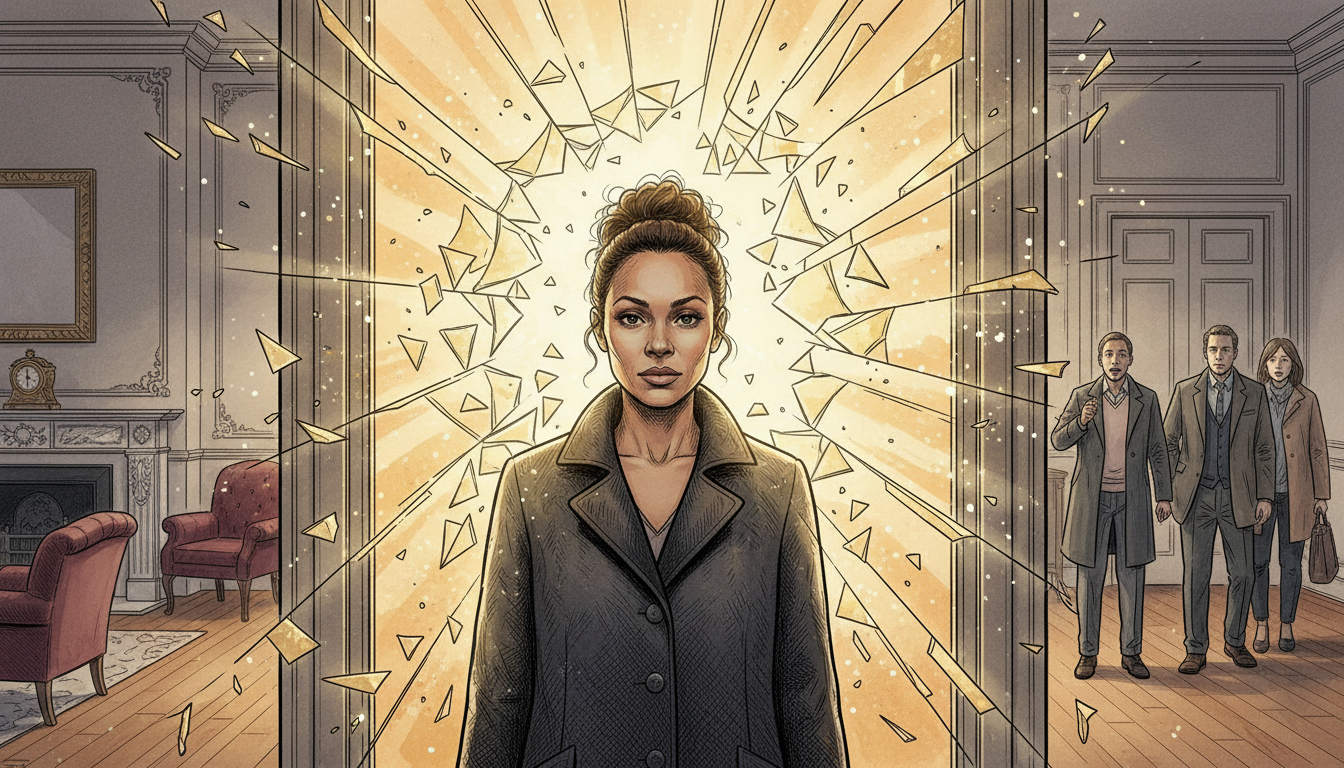
What is the Glass of denial?
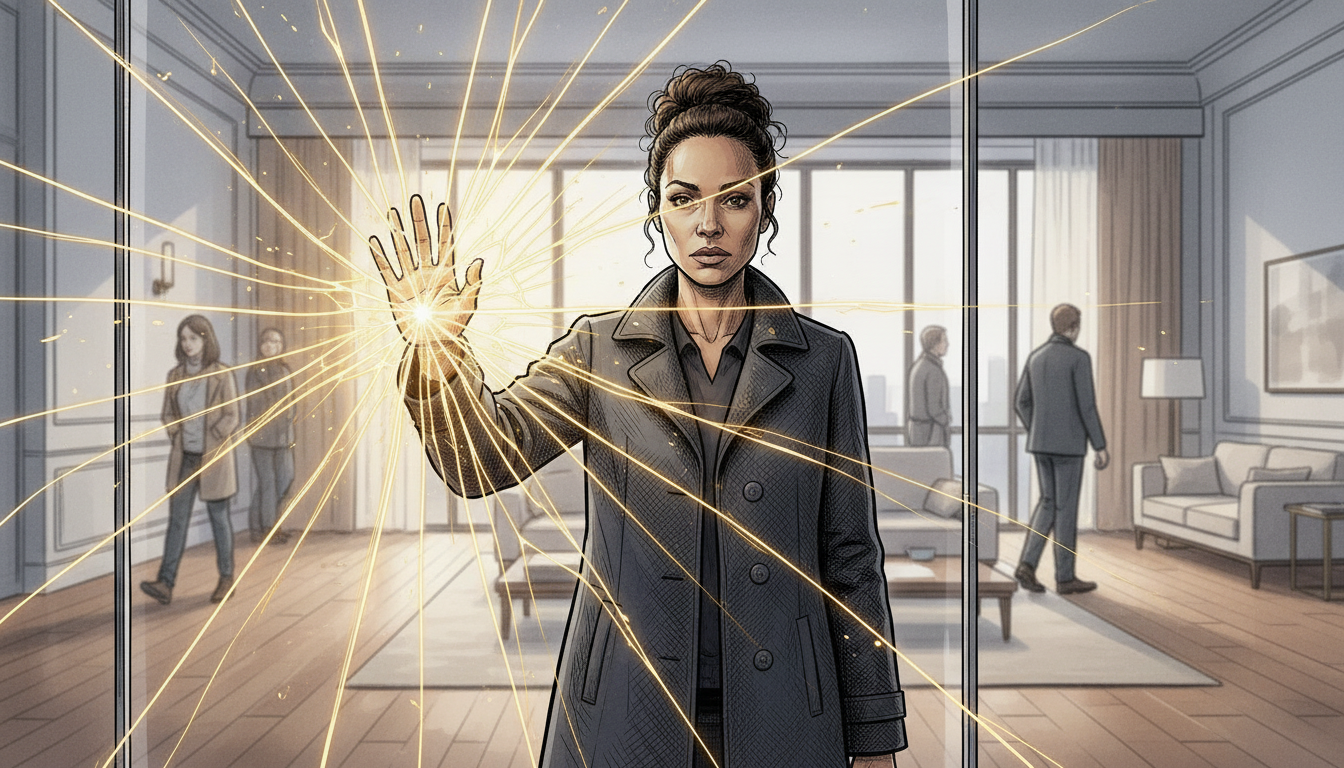
Put the three together and something forms between us and reality. The Glass is invisible, it is also impenetrable.
Behind it we can stay in situations we do not want, do things we do not want to do, and repeat them again and again. Most costly of all, we lose the belief that choosing something better is possible.
This is how a woman (or anyone) can see what is happening to her and still not move.
How do you stop denial?
Detriggering is the work I do to remove the charge, the unprocessed energy and emotion from the past, from the body. Then it removes the meaning we add to the present moment, including false thoughts like "this may not be happening".
This is what breaks the Glass. It lets you meet reality where it is, with your full faculties, so you can make the best decision for you in each moment.
We often look for safety in a lock on the door, in a promise that it will never happen again, in windows bolted shut. Real safety is something we install in ourselves. It starts with being able to say:
This is happening.
This did happen.
This will happen again if I go back.